
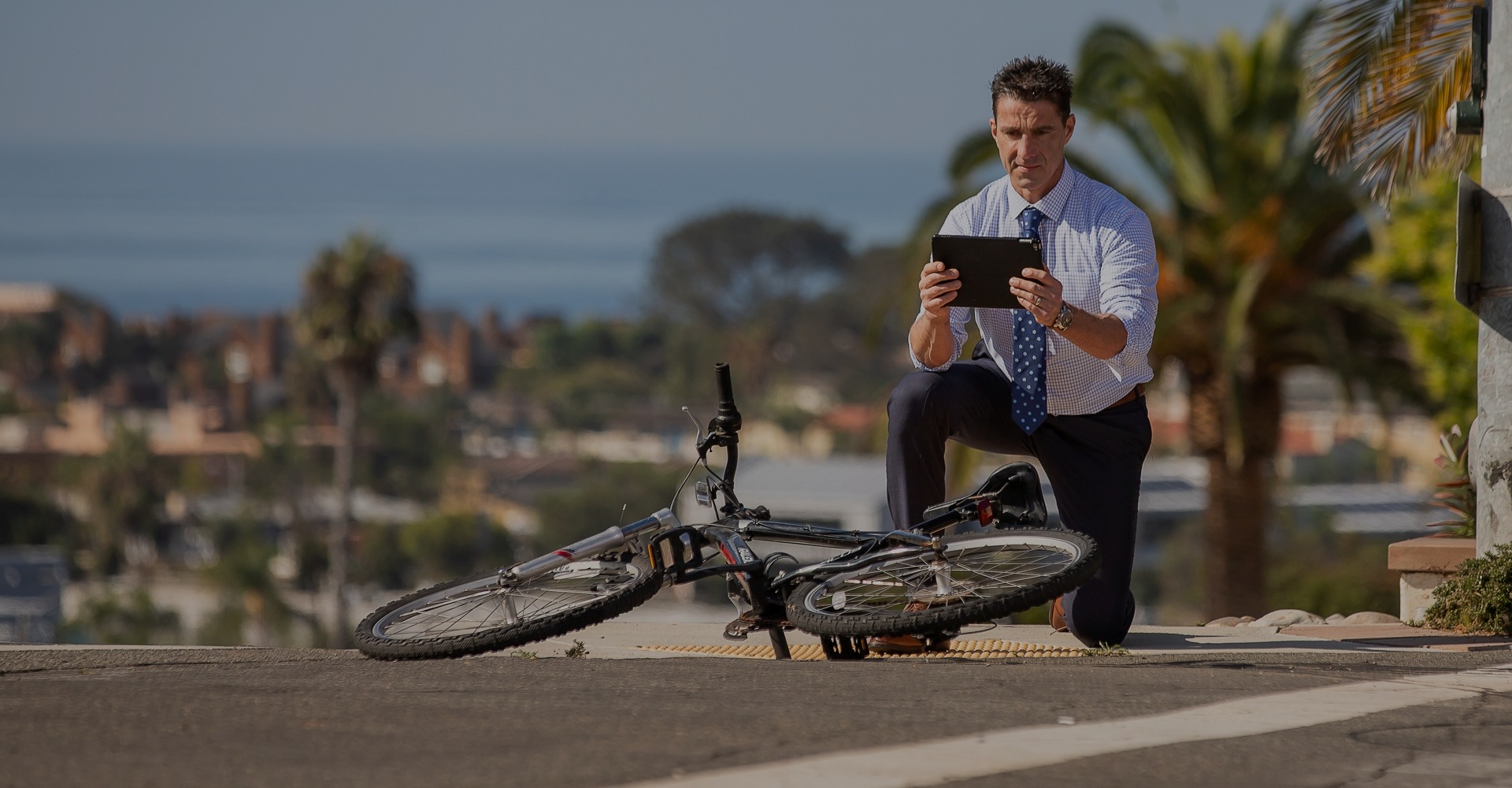

San Diego Bicycle Accident Lawyers
Millions Recovered for Our Clients. Over 150 5-Star Reviews. No Win, No Fee—Guaranteed.
FREE CASE EVALUATIONSan Diego offers numerous opportunities for cycling enthusiasts, with its extensive network of bike paths and lanes. However, too many motorists are still unaccustomed to sharing the road with bicycles, leading to serious and often fatal accidents. If you or a loved one has been injured in a bicycle accident, it’s crucial to have an experienced San Diego bicycle accident lawyer on your side. At Phillips & Pelly, our team is dedicated to holding negligent drivers accountable and securing justice for our clients.
How 2026 Changes Affect San Diego Bicycle Accident Cases
Recent developments in cycling technology, infrastructure, and insurance practices have created new considerations for bicycle accident victims:
E-Bike Proliferation and Legal Distinctions
Electric bicycles have transformed urban cycling in San Diego, but they create unique legal questions in accident cases. California classifies e-bikes into three categories with different rules:
- Class 1 (Pedal-assist, max 20 mph): Treated like traditional bicycles; allowed on bike paths
- Class 2 (Throttle-assist, max 20 mph): Throttle operation; restricted from some bike paths
- Class 3 (Pedal-assist, max 28 mph): Speed pedelecs; helmet required for all ages, prohibited from many bike paths
When e-bike accidents occur, insurance companies scrutinize:
- Whether the rider was using the correct bike infrastructure for their e-bike class
- If speed capabilities contributed to accident severity
- Whether helmet laws were violated (Class 3 requires helmets for all riders)
These distinctions affect comparative fault arguments. We investigate e-bike classification and infrastructure rules to counter inflated fault claims.
San Diego’s Vision Zero Bike Infrastructure Updates
San Diego’s 2026 bike lane expansion added protected lanes on:
- Park Boulevard (Balboa Park to University Heights)
- 30th Street corridor (North Park)
- Sports Arena Boulevard (Point Loma)
- Portions of Imperial Avenue (downtown to Southeast San Diego)
However, many high-crash corridors still lack protected infrastructure. When accidents occur on roads where bike lanes were promised but not delivered, this evidence supports liability claims.
AI-Powered Fault Determination
Insurance companies now deploy AI systems that analyze crash photos and police reports to assign fault within hours. These algorithms often assign disproportionate fault to cyclists by:
- Flagging any deviation from bike lanes as cyclist negligence
- Assuming cyclists who weren’t wearing helmets contributed to their injuries
- Treating any traffic violation (running stop signs, etc.) as primary fault
We challenge AI-generated fault assessments by demanding human review and providing context that automated systems miss.
Automated Emergency Braking (AEB) Systems
California’s 2026 requirement that new vehicles include pedestrian/cyclist detection creates new liability arguments. When AEB-equipped vehicles fail to prevent bicycle strikes, investigations must determine:
- Was the system functioning properly?
- Did the driver override or disable safety features?
- Was the bicycle visible to detection sensors?
Vehicle manufacturer liability may extend beyond driver negligence when AEB systems malfunction.
Increased Rideshare/Delivery Vehicle Conflicts
The explosion of app-based delivery services (Uber Eats, DoorDash, Amazon Flex) has increased vehicle-bicycle conflicts as drivers:
- Make sudden stops and door openings
- Focus on phones rather than traffic
- Drive distracted searching for addresses
- Operate under time pressure encouraging unsafe maneuvers
These accidents often involve multiple insurance layers and corporate defendants.
San Diego’s Most Dangerous Roads and Intersections for Cyclists
Our firm has represented bicycle accident victims throughout San Diego County. Based on California Office of Traffic Safety data and our case experience, these locations present the highest collision risks:
University Avenue (Hillcrest to La Mesa)
This major east-west corridor experiences high cyclist crash rates due to:
- Multiple traffic lanes – Drivers change lanes unpredictably
- Commercial driveways – Vehicles entering/exiting without checking bike lanes
- Bus stops – Conflicts between cyclists and buses
- Parking turnover – Constant risk of “dooring” from opening car doors
- Night activity – Bar district creates impaired driver risks
Specific high-risk intersections:
- University & Park Boulevard
- University & 30th Street
- University & College Avenue
El Cajon Boulevard (City Heights to La Mesa)
Historically one of San Diego’s deadliest roads for all users:
- Wide lanes encourage speeding – Posted limits routinely exceeded
- Limited bike infrastructure – Most sections lack protected lanes
- High pedestrian activity – Creates complex conflict points
- Commercial density – Frequent turning movements across bike lanes
Specific high-risk areas:
- El Cajon Blvd & Fairmount Avenue
- El Cajon Blvd & 70th Street
- El Cajon Blvd near City College
Pacific Highway (Downtown to Old Town)
Major commuter route with inadequate cyclist protection:
- High-speed traffic – 40-50 mph despite urban setting
- Airport access – Unfamiliar drivers and rental cars
- Truck traffic – Commercial vehicles with limited visibility
- Complex merges – Multiple freeway on/off ramps
Specific danger zones:
- Pacific Highway & Sassafras Street
- Pacific Highway & Laurel Street
- Merges near Old Town Transit Center
Park Boulevard (Balboa Park Corridor)
Heavy recreational and commuter cycling:
- Tourist traffic – Unfamiliar drivers distracted by park attractions
- Parallel parking – Constant dooring risk
- Limited sight lines – Curves and vegetation obstruct visibility
- Speed mismatches – Fast vehicle traffic mixed with casual cyclists
Specific problem areas:
- Park Boulevard & University Avenue
- Park Boulevard through Balboa Park
- Park Boulevard & El Cajon Boulevard
Friars Road (Mission Valley)
Commercial corridor with dangerous cyclist conditions:
- No continuous bike lanes – Infrastructure gaps force dangerous merges
- High speeds – 45+ mph traffic
- Shopping center access – Drivers focused on parking, not cyclists
- Poor lighting – Inadequate visibility after dark
Specific hazards:
- Friars Road & Mission Center Road
- Friars Road & Frazee Road
- Fashion Valley Mall area
Mission Boulevard / Mission Bay Drive
Beach community routes with unique risks:
- Tourist drivers – Unfamiliar with roads and distracted by scenery
- Alcohol-related crashes – Bar districts in Pacific Beach and Mission Beach
- Inconsistent bike lanes – Infrastructure starts and stops unpredictably
- Parking conflicts – Beach access creates chaotic parking maneuvers
Specific danger spots:
- Mission Boulevard & Garnet Avenue (PB)
- Mission Bay Drive & East Mission Bay Drive
- West Mission Bay Drive & Ingraham Street
Downtown San Diego
Urban grid with multiple cyclist hazards:
- One-way streets – Drivers don’t expect cyclists on certain routes
- Delivery vehicles – Double-parked trucks block bike lanes
- Right-hook turns – Vehicles turning right across bike lanes
- Uber/Lyft pickups – Sudden stops and door openings
Specific high-crash intersections:
- Broadway & Harbor Drive
- Fifth Avenue & Market Street
- India Street & Grape Street
Coastal Highway 101 (La Jolla to Oceanside)
Scenic route popular with recreational cyclists:
- Speed differentials – Fast vehicle traffic mixed with tourist cyclists
- Limited shoulders – Narrow or nonexistent bike space
- Cliff edges – No margin for error
- Heavy weekend traffic – Congestion increases conflict risk
Specific problem areas:
- Torrey Pines grade (blind curves, high speed)
- Cardiff-by-the-Sea (restaurant district parking conflicts)
- Encinitas downtown (narrow lanes, heavy pedestrian traffic)
Otay Mesa / South San Diego
Industrial areas with commercial vehicle conflicts:
- Truck traffic to/from border – Large vehicles with limited cyclist visibility
- Inadequate infrastructure – Few bike lanes or paths
- High speeds – Industrial areas designed for vehicles, not cyclists
- Poor lighting – Visibility issues in industrial zones
When Accident Location Strengthens Your Case
If your crash occurred at a location where:
- Vision Zero identified the area as high-priority but hadn’t implemented improvements
- Previous cyclists were injured at the same intersection
- Residents repeatedly complained about cycling safety
- City traffic studies documented hazards
This evidence establishes that dangerous road design contributed to your accident, strengthening liability claims and reducing comparative fault arguments.
We investigate whether:
- Previous similar accidents occurred at the same location
- Your accident location was on San Diego’s bike safety priority list
- Infrastructure improvements were budgeted but not completed
- Road design violated California cyclist safety standards (Caltrans Highway Design Manual Chapter 1000)
California Bicycle Helmet Laws and Their Impact on Claims
California Bicycle Helmet Laws and Their Impact on Claims
California law requires all bicyclists under the age of 18 to wear a helmet while riding. While adults are not legally required to wear helmets, wearing one significantly reduces the risk of head injuries in the event of a crash.
What if I Wasn’t Wearing a Helmet?
If you were not wearing a helmet at the time of your accident, you can still pursue compensation for your injuries. However, insurance companies may argue that the lack of a helmet contributed to your injuries—a legal concept known as comparative fault. In California, your compensation could be reduced if it is determined that not wearing a helmet made your injuries worse, but it does not bar you from recovering damages.
For more, see California Vehicle Code § 21212
Dealing With Uninsured or Underinsured Drivers
Unfortunately, many bicycle accidents involve drivers who lack adequate insurance coverage. If you are hit by an uninsured or underinsured driver, you may still have options. Your own auto policy (if you have one) may include uninsured/underinsured motorist coverage, which can be used to help cover your losses. Our attorneys can review your policy, identify all potential sources of recovery, and pursue every available avenue for compensation.
Understanding California’s Pure Comparative Fault in Bicycle Accidents
California’s pure comparative fault system allows injured cyclists to recover compensation even when partially at fault. However, insurance companies exploit this rule to minimize payouts through aggressive fault inflation tactics.
How Pure Comparative Fault Works for Cyclists
- If you’re 15% at fault, you recover 85% of damages
- If you’re 40% at fault, you recover 60% of damages
- Even at 75% fault, you can still recover 25% of damages
Common Scenarios Where Cyclists Share Fault
Not Using Designated Bike Lanes
California Vehicle Code §21208 requires cyclists to use bike lanes when present and safe to do so. However, exceptions apply when:
- Bike lanes are obstructed (parked cars, debris, construction)
- Preparing to make left turns
- Avoiding hazardous conditions (potholes, drainage grates)
- Lane is unsafe due to traffic conditions
Example: You rode outside the bike lane to avoid a parked delivery truck. A driver changing lanes struck you. Insurance will argue you violated CVC §21208, but the obstructed lane provides legal justification. You might be assigned 10-15% fault rather than the 40%+ insurers initially claim.
Failure to Signal Turns or Lane Changes
CVC §22111 requires hand signals for turns and lane changes. However, maintaining bike control often takes priority over signaling.
Example: You didn’t signal before moving left to avoid a car door opening. A driver behind you struck your rear wheel. While technically a violation, the sudden door opening created the emergency. Proper investigation shifts primary fault to the door-opener.
Running Stop Signs or Red Lights
Many cyclists treat stop signs as yield signs (“Idaho stop”), which is illegal in California. However, drivers still must exercise reasonable care.
Example: You rolled through a stop sign at 5 mph after checking for traffic. A driver texting ran the perpendicular stop sign at 35 mph and struck you. While your violation contributes fault, the driver’s distraction and speed violation make them primarily liable. Expected fault split: 20-30% cyclist, 70-80% driver.
Riding Against Traffic
CVC §21650 requires bicycles to ride with traffic flow, not against it. This violation significantly increases fault percentages because it violates drivers’ expectations.
Example: You rode against traffic on the shoulder to access a business. A driver turning right struck you. Riding against traffic typically assigns 40-60% fault to cyclists, though driver negligence (failure to look) still establishes their liability.
Not Wearing a Helmet (Adults)
Adults aren’t legally required to wear helmets in California. However, insurance companies argue that lack of helmets contributed to injury severity, even when helmets wouldn’t have prevented the injuries sustained.
Example: A car doored you, causing arm and rib fractures. Insurers argue not wearing a helmet shows “contributory negligence” despite your injuries being to your torso. We counter by showing helmet irrelevance to actual injuries sustained.
Night Riding Without Lights
CVC §21201 requires bicycles to have white front lights and red rear reflectors when riding at night. Violations create significant fault arguments.
Example: You rode at dusk without lights. A driver turning left struck you. While the light violation contributes fault (30-40%), drivers still must maintain proper lookout and yield to visible traffic. If the driver was also speeding or distracted, fault splits more evenly.
Intoxicated Cycling
CVC §21200.5 prohibits cycling under the influence. DUI cycling doesn’t prevent recovery but substantially increases fault percentages.
Example: You left a bar intoxicated and cycled home. A driver ran a red light and struck you. Both impairments contribute to fault, but the driver’s red-light violation establishes their primary liability.
E-Bike Classification Violations
Riding Class 3 e-bikes on paths restricted to Class 1/2, or riding without required helmets.
Example: You rode a Class 3 e-bike on a bike path restricted to Class 1/2. A vehicle emerging from a driveway struck you. The classification violation contributes 20-30% fault, but the driver’s failure to yield at a driveway crossing establishes their primary liability.
How Insurance Companies Inflate Cyclist Fault
Tactic #1: Immediate Scene Documentation
Insurers dispatch investigators to accident scenes within hours, photographing:
- Bike lane availability (arguing you should have used it)
- Traffic control devices (claiming you violated them)
- Lighting conditions (arguing visibility issues)
- Road conditions (before evidence changes)
They document everything supporting fault arguments before cyclists obtain legal representation.
Tactic #2: Recorded Statements Within 24 Hours
Adjusters contact injured cyclists in emergency rooms asking:
- “Were you wearing a helmet?” (Sets up contributory negligence)
- “Were you in the bike lane?” (Establishes lane violation)
- “Did you signal?” (Creates failure-to-signal arguments)
- “How fast were you going?” (Implies excessive speed)
These statements are taken before cyclists understand legal implications.
Tactic #3: Cyclist Stereotyping
Insurers exploit anti-cyclist bias by arguing:
- “Cyclists always run stop signs” (pattern behavior assumption)
- “You weren’t following traffic laws” (even without specific evidence)
- “Cyclists take unnecessary risks” (character arguments)
These stereotypes inflate fault percentages beyond what evidence supports.
Tactic #4: Biomechanical Analysis Manipulation
Insurance companies retain engineers who claim injury severity proves excessive cyclist speed, even when vehicles struck stationary cyclists.
How We Counter Fault Inflation
Independent Accident Reconstruction
We retain cycling-specific engineers who analyze:
- Vehicle speeds based on impact damage and skid marks
- Sight lines and visibility from driver perspective
- Cyclist position and trajectory at impact
- Road surface conditions affecting cyclist control
Traffic Engineering Analysis
We investigate whether road design contributed to accidents:
- Bike lanes that abruptly end, forcing merges with traffic
- Drainage grates oriented to trap bicycle wheels
- Potholes or road defects in bike lanes
- Poor visibility at intersections due to vegetation or parked vehicles
Video Evidence Preservation
We immediately issue preservation letters to:
- Traffic camera operators (CalTrans, City of San Diego)
- Businesses near accident scenes
- Cyclists’ own helmet cameras or handlebar-mounted devices
- Dash cameras from nearby vehicles
Expert Testimony on Cyclist Behavior
We work with cycling advocates and engineers who explain:
- Why cyclists sometimes leave bike lanes (safety considerations)
- Standard cycling practices in specific situations
- How experienced cyclists assess and respond to road hazards
- Industry-standard safety practices
Helmet Irrelevance Arguments
When insurers claim helmet absence contributed to injuries:
Biomechanical analysis shows impact forces exceeded h
We demonstrate injuries weren’t to the head
Medical experts testify helmets wouldn’t have prevented actual injuries
Critical Steps After Being Hit While Cycling
Actions taken immediately after bicycle accidents directly affect your ability to recover full compensation:
1. Call 911 Immediately
Even if injuries seem minor, request both police and paramedics. This creates:
- Official police report – Documents driver information, initial fault assessment, traffic violations
- Medical documentation – Establishes injury timing and severity
- Witness preservation – Police identify and interview witnesses
Refusing ambulance transport creates insurance arguments that injuries aren’t serious.
2. Document Everything at the Scene
If physically able, photograph:
- Your bicycle damage – Shows impact force and point of contact
- Vehicle damage – Proves collision occurred and impact severity
- Road conditions – Bike lane markings, potholes, debris
- Traffic controls – Signals, signs, crosswalk markings
- Your visible injuries – Bruising, road rash, bleeding
- Driver’s license and insurance – Front and back of cards
- Vehicle license plate – In case driver flees
Take photos from multiple angles showing:
- Your position relative to bike lane
- Driver’s position relative to traffic controls
- Skid marks or debris field
- Sight line obstructions
3. Preserve Your Bicycle and Equipment
Don’t repair or dispose of:
- Damaged bicycle – Frame damage proves impact force
- Helmet – Cracks/damage show head impact (even if no injury)
- Cycling computer/GPS – Speed and route data
- Lights and reflectors – Proves visibility compliance
- Clothing – Shows impact points and road contact
Insurance companies inspect damaged bicycles to verify accident severity and impact dynamics.
4. Identify Witnesses
Get contact information from:
- Other cyclists who saw the crash
- Pedestrians at the scene
- Drivers stopped at the intersection
- Business employees who may have seen it
Ask each witness:
- What they saw happen
- Where they were when the crash occurred
- Their phone number and email
Witnesses disappear quickly—get information before leaving the scene.
5. DO NOT Give Recorded Statements
Insurance adjusters will contact you within hours requesting recorded statements. You must report the accident to your own insurance, but you don’t have to provide detailed recorded statements to the driver’s insurer.
Common trap questions:
- “Were you wearing a helmet?” (Sets up contributory negligence)
- “Were you in the bike lane?” (Establishes violations)
- “How fast were you going?” (Implies excessive speed)
- “Had you been drinking?” (Creates impairment issues)
Simply state: “I need to consult with an attorney before providing detailed statements.”
6. Seek Immediate Medical Evaluation
Go to emergency room or urgent care even if you feel fine. Many serious injuries have delayed symptoms:
- Brain injuries – Symptoms may not appear for days
- Internal bleeding – Can be life-threatening if untreated
- Spinal damage – Initial adrenaline masks pain
- Fractures – Not always immediately painful
Medical records establish:
- Injury causation (linked to the accident)
- Injury severity (supporting compensation demands)
- Treatment necessity (justifying medical costs)
7. DO NOT Accept Early Settlement Offers
Insurers contact bicycle accident victims within days offering “quick settlements.” These offers:
- Come before injuries are fully diagnosed
- Don’t account for future medical needs or complications
- Require releases preventing future claims
- Typically represent 20-40% of actual case value
Once you sign a release and accept payment, you cannot pursue additional compensation—even if you develop serious complications or discover permanent injuries.
8. DO NOT Post on Social Media
Insurance companies monitor social media for evidence contradicting injury claims:
- Photos of you on bicycles → “Not really injured”
- Check-ins at gyms or active locations → “Exaggerating limitations”
- Posts about cycling plans → “Claims are fraudulent”
Make all profiles private and don’t post about:
- The accident or how it occurred
- Your injuries or treatment
- Your recovery progress
- Any physical activities
Even innocent posts can be misrepresented by insurance defense lawyers.
9. Download and Preserve Digital Evidence
If you use cycling technology:
- Strava/Map My Ride data – Route and speed information
- Garmin/Wahoo computer data – Proves your speed and position
- Helmet camera footage – If equipped
- Phone GPS data – Location history
Download this data immediately—some apps delete older data automatically.
10. Contact a Bicycle Accident Lawyer Within Days
Early legal involvement protects your rights by:
- Issuing evidence preservation letters before surveillance video is deleted
- Conducting independent accident investigation while details are fresh
- Preventing insurance tactics like recorded statements and early settlements
- Coordinating with bicycle-specific medical experts
- Preserving damaged bicycle and equipment for expert analysis
Evidence Disappears Rapidly
Critical evidence has limited lifespan:
- Surveillance video – Deleted after 30-90 days
- Traffic camera footage – Overwritten within weeks
- Skid marks – Washed away by rain or street cleaning
- Road debris – Cleared by maintenance crews
- Witness memories – Fade within days
- Damaged bicycle – Some insurance requires immediate disposal
The sooner you contact our firm, the more evidence we can preserve.
recent case results
Why Our Former Prosecutors and Insurance Defense Lawyers Win Bicycle Cases
Phillips & Pelly’s team includes attorneys who previously worked for insurance companies and served as prosecutors. This background creates specific advantages in bicycle accident cases:
We Know How Insurance Companies Attack Cyclist Claims
Having defended insurance companies, we understand their anti-cyclist strategies:
Tactic: Immediate Fault Inflation
Insurers assign maximum fault to cyclists, exploiting anti-bike bias. We counter with accident reconstruction proving driver negligence was the primary cause.
Tactic: “Cyclists Always Violate Traffic Laws”
Insurers make blanket assumptions about cyclist behavior without specific evidence. We force them to prove specific violations rather than relying on stereotypes.
Tactic: Medical Treatment Attacks
They argue injuries are minor because “cyclists are in good shape.” We use medical experts who explain injury severity regardless of fitness level.
Tactic: Helmet Arguments
Even when injuries weren’t to the head, insurers argue helmet absence shows poor judgment. We demonstrate helmet irrelevance to actual injuries sustained.
We Understand Cyclist-Specific Evidence
Our team includes cyclists who understand the evidence that matters:
- Bicycle damage patterns that prove impact severity and fault
- GPS/Strava data showing speed and position
- Bike lane infrastructure defects contributing to accidents
- Why cyclists sometimes leave bike lanes (safety considerations)
- Industry-standard cycling safety practices
We Work With Cycling-Specific Experts
Through decades of bicycle accident litigation, we’ve built relationships with:
- Bicycle engineers who analyze crash dynamics
- Traffic safety experts familiar with bike infrastructure
- Medical professionals who understand cycling injuries
- Cycling advocates who explain standard practices
Our Results Demonstrate Cycling Advocacy
Since 1997, we’ve recovered more than $200 million for accident victims, with substantial portions involving bicycle and pedestrian cases. Our commitment to cycling safety extends beyond individual cases:
- We advocate for Vision Zero infrastructure improvements
- We support local cycling advocacy organizations
- We speak at cycling safety events
- We ride bicycles ourselves and understand the risks cyclists face daily
When you hire Phillips & Pelly, you hire lawyers who actually understand cycling culture and the unique challenges cyclists face on San Diego roads.
Call or email us now for a free case evaluation with one of our experienced bike accident injury attorneys in San Diego.
Frequently Asked Questions About Bicycle Accidents in California
What should I do immediately after a bicycle accident in San Diego?
After a bicycle accident in California, prioritize your safety and health. Move to a safe location if possible and call 911 for medical assistance and to report the accident. Gather evidence by taking photos of the scene, your injuries, and any damages to your bike. Exchange contact and insurance information with the involved parties and get contact details of any witnesses. It’s crucial to seek medical attention even if you feel fine, as some injuries may not be immediately apparent. Finally, contact an experienced San Diego bicycle accident lawyer to discuss your case and protect your rights.
Can I still recover compensation if I was partially at fault for the bicycle accident?
Yes, may still be able to recover compensation even if you were partially at fault for the bicycle accident in California. The state follows a comparative negligence rule, which means your compensation will be reduced by your percentage of fault. For example, if you were found to be 20% at fault for the accident, your compensation would be reduced by 20%. It’s important to consult with a knowledgeable San Diego bicycle accident attorney who can help you navigate this process and ensure you receive fair compensation despite any partial fault.
What types of compensation can I receive after a bicycle accident?
After a bicycle accident, you may be entitled to various types of compensation. This can include medical expenses for both current and future treatments, lost wages if your injuries prevent you from working, and compensation for pain and suffering. Additionally, you can claim for property damage to your bicycle and other personal items. In some cases, you might also be eligible for punitive damages if the at-fault party’s conduct was particularly reckless. Consulting with an experienced San Diego bicycle accident lawyer will help ensure you pursue all applicable types of compensation for your specific case.
What is your “No Fee Until We Win Guarantee”?
In a nutshell, our Clients are not responsible for attorney fees until we recover money on their behalf. Once a case settles, our fees are simply deducted from the settlement amount. Guaranteed. We believe that every Client deserves strong representation regardless of their financial circumstances. By basing attorney fees on a percentage of money recovered, we are able to offer every Client with a valid claim, the very best representation possible.
Am I eligible for compensation if I wasn’t wearing a helmet during my accident?
Yes. In California, adults are not required by law to wear a helmet while cycling. Even if you were not wearing a helmet, you can pursue a claim for injuries. However, insurance companies may argue that not wearing a helmet contributed to the severity of head injuries, which could affect your compensation.
What if the driver who hit me did not have insurance?
If you are involved in a collision with an uninsured or underinsured driver, you may still be able to recover damages through your own uninsured/underinsured motorist coverage or other sources. An attorney can help identify and pursue all available avenues for compensation.
How long do I have to file a bicycle accident claim in California?
The statute of limitations for most personal injury cases in California is two years from the date of the accident. Claims involving government entities (such as unsafe road conditions maintained by the city or county) must be filed within six months. Contacting a lawyer as soon as possible helps ensure important deadlines are not missed.
Request a Free Case Evaluation
Do I have a case? Find out now, it costs nothing.
Tell us about your accident and your injuries. An injury lawyer from our team will call and provide you with a Free Evaluation of your Case. If we can help, and you are unable to travel, we will come to your home, office or hospital. It’s easy – let’s get started.
-

Let’s Talk…
Give us a call. We welcome discussing your case. 858-794-1700.
-

Email Us Anytime
Email us at contact@sdinjury.com.
-

We’ll Come To You
Looking for convenience? We can come to your home, office or hospital and work around YOUR schedule.
-

Accessible
We are available after hours, weekends and holidays. We worked hard. And it shows!