
Can You Recover Compensation If You Were Partially at Fault in an Uber Accident in California?
Posted by Laura Yutzy on March 17th, 2026 - Car Accidents, Rideshare Accidents, Uber Accidents
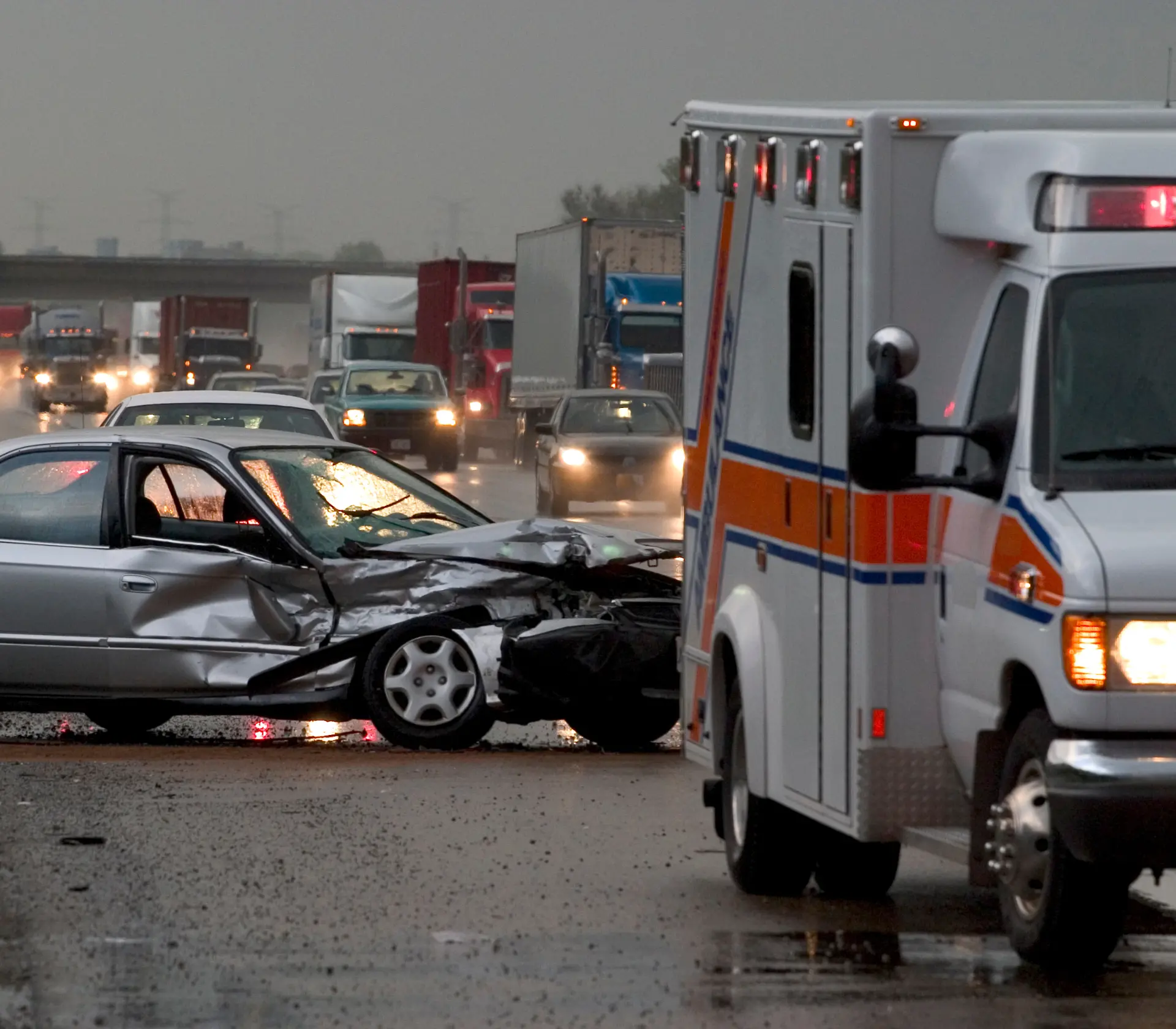
Many people assume that being partially responsible for an accident eliminates their right to compensation. This assumption is incorrect under California law.
California applies a pure comparative negligence rule to all personal injury claims, including rideshare accidents. This means injury victims can recover compensation even when they share fault for the accident. Their total recovery is simply reduced by their percentage of responsibility.
However, Uber accidents involve additional complexity beyond standard comparative negligence analysis. Multiple insurance policies, rideshare-specific coverage tiers, and recent statutory changes create unique considerations when fault is shared.
Understanding how partial fault affects Uber accident claims requires examining both California’s comparative negligence framework and the specific insurance structures that apply to rideshare crashes.
California’s Pure Comparative Negligence Rule
California follows a pure comparative negligence system under California Civil Code Section 1714. Under this rule, a plaintiff’s recovery is reduced by their percentage of fault, regardless of how high that percentage may be.
If a plaintiff is found 40% responsible for an accident that caused $100,000 in total damages, they can recover $60,000 (60% of the total). If they are found 75% at fault, they can still recover $25,000.
This differs from modified comparative negligence systems used in other states, where plaintiffs cannot recover if their fault exceeds 50% or 51%.
How Fault Percentage Is Determined
Fault allocation is determined by analyzing the actions of all parties involved in the accident. Key factors include:
- Traffic law violations
- Distracted or impaired driving
- Failure to maintain proper following distance
- Improper lane changes or turns
- Speed relative to conditions
- Adherence to right-of-way rules
Evidence used to establish fault includes police reports, witness statements, traffic camera footage, accident reconstruction analysis, and vehicle damage patterns.
For a detailed explanation of how fault is proven in rideshare cases, see our guide on how to prove fault in Uber accident claims.
Common Scenarios Involving Partial Fault in Uber Accidents
Several accident scenarios frequently involve shared responsibility between Uber passengers, drivers, or other parties.
Passenger Distraction
While passengers are rarely found at fault in car accidents, specific actions can contribute to an accident:
- Grabbing the steering wheel or interfering with vehicle controls
- Creating visual obstructions (excessive movement, blocking mirrors)
- Causing the driver to take sudden evasive action
These behaviors can result in partial fault allocation even for passengers who were not operating the vehicle.
Pedestrian or Cyclist Violations
Victims struck by Uber vehicles while walking or cycling may share fault if they:
- Crossed against traffic signals
- Entered roadways outside designated crosswalks
- Failed to yield right-of-way to vehicles
- Were operating bicycles in violation of traffic regulations
Our article on Uber accidents involving motorcycles and bicycles discusses these scenarios in greater detail.
Uber Driver Partial Fault
Uber drivers can also be partially at fault while another party bears primary responsibility. For example:
- The driver was speeding when another vehicle ran a red light
- The driver failed to maintain proper distance when the lead vehicle stopped suddenly
- The driver was following too closely when struck from behind
Driver fault status affects which insurance policy applies and how damages are allocated. For more on driver-specific issues, see our overview of Uber passenger versus driver rights.
How Uber’s Insurance Structure Complicates Partial Fault Analysis
Standard comparative negligence analysis becomes more complex in Uber accidents due to the rideshare insurance framework.
Multiple Policy Application
When an Uber accident involves partial fault, multiple insurance policies may be implicated:
- The Uber driver’s personal auto insurance
- Uber’s commercial liability coverage (amount depends on driver app status)
- Other involved drivers’ insurance policies
- The claimant’s own uninsured/underinsured motorist coverage
Each insurer may argue that another policy should bear primary responsibility, particularly when fault is divided among multiple parties.
Coverage Tier Disputes
Uber’s insurance coverage operates on a tiered system based on driver activity at the time of the accident:
App Offline
No Uber coverage applies. Driver’s personal insurance is primary.
App Online, Awaiting Ride Request
Limited contingent liability coverage applies (currently $50,000 per person, $100,000 per accident in California).
En Route to Pickup or Transporting Passenger
Uber’s $1 million liability policy applies.
When fault is shared, insurers may dispute which tier applies, particularly in cases where the driver’s app status is unclear or changed immediately before the collision.
2026 Uninsured Motorist Coverage Reductions
Effective January 1, 2026, Senate Bill 371 reduced Uber’s uninsured motorist coverage from $1 million to $60,000 per person.
This reduction significantly affects partially at-fault claimants struck by uninsured drivers. Previously, Uber’s UM coverage could compensate for both the uninsured driver’s liability and the claimant’s reduced recovery due to their own partial fault. The reduced coverage limit may leave substantial gaps in serious injury cases.
Insurance Company Tactics in Partial Fault Cases
Insurance companies frequently use comparative negligence arguments to reduce claim value, particularly in rideshare accidents where coverage disputes already exist.
Fault Inflation
Insurers may assert higher fault percentages than evidence supports. Common arguments include:
- Attributing “failure to avoid the accident” fault to victims who had no reasonable opportunity to react
- Claiming pedestrians or cyclists “should have seen” vehicles that appeared suddenly or violated traffic laws
- Asserting that victims contributed to their injuries by not wearing seatbelts (California does not allow seatbelt non-use to reduce damages, but insurers still make this argument)
These assertions require factual rebuttal supported by accident reconstruction, witness testimony, or expert analysis.
Recorded Statement Use
Insurance adjusters often request recorded statements before claimants understand the full scope of the accident or their injuries. Statements made during these calls can later be characterized as admissions of fault.
Questions that appear routine may be designed to elicit responses that support comparative negligence arguments:
- “Were you paying attention to the road?”
- “Could you have braked sooner?”
- “Did you see the other vehicle before impact?”
Responses to these questions should be carefully considered, as they become part of the claim file and can be used to justify reduced settlements.
Early Settlement Pressure
When partial fault exists, insurers may offer quick settlements that fail to account for the full value of damages even after fault reduction.
For example, if total damages are $100,000 and the claimant is 30% at fault, their compensable damages should be $70,000. An early offer of $40,000 represents both an improper valuation of total damages and an excessive fault allocation.
Protecting Your Recovery When Partially at Fault
Several steps can help preserve maximum compensation when fault is shared.
Immediate Post-Accident Documentation
Evidence collected immediately after an accident is critical for contesting excessive fault allocation:
- Photographs of vehicle positions, damage patterns, skid marks, and traffic control devices
- Witness contact information and initial statements
- Weather and visibility conditions
- Traffic camera or dashcam footage
This evidence should be preserved before memories fade and physical evidence is altered or removed.
Avoiding Premature Statements
No legal obligation requires claimants to provide recorded statements to insurance companies prior to consulting with counsel. Statements should not be given until:
- The full extent of injuries is understood
- All relevant evidence has been reviewed
- The claimant understands how partial fault may affect their claim
Independent Accident Reconstruction
In disputed liability cases, independent accident reconstruction can provide objective analysis of fault. Reconstruction experts use:
- Vehicle damage analysis
- Speed calculations based on physical evidence
- Sight line and reaction time analysis
- Traffic signal timing data
- Event data recorder information from involved vehicles
This analysis can counter insurer arguments and establish accurate fault percentages.
Comprehensive Damage Documentation
When fault is shared, proper damage valuation becomes even more critical. Claimants should document:
- All medical treatment, including future anticipated care
- Lost wages and reduced earning capacity
- Property damage
- Non-economic damages (pain and suffering, loss of enjoyment of life)
Accurate total damage valuation ensures that the reduced recovery amount still adequately compensates for actual losses.
Special Considerations for Different Uber Accident Victim Types
Fault analysis varies depending on the claimant’s role in the accident.
Passengers
Uber passengers are rarely found at fault because they do not control the vehicle. However, as noted above, certain passenger actions can contribute to accidents.
When passengers are partially at fault, they can typically pursue claims against:
- The Uber driver’s insurance (if the driver shares fault)
- Other drivers’ insurance (if third parties are involved)
- Uber’s liability coverage (depending on driver app status)
Passenger claims are generally simpler than driver claims because passengers do not face policy exclusions for using vehicles for commercial purposes.
Drivers (Uber Drivers or Other Motorists)
Drivers face more complex coverage issues when partially at fault. Uber drivers must consider:
- Whether their personal insurance excludes coverage for commercial rideshare activity
- Whether Uber’s coverage applies based on app status at the time of impact
- Whether they can pursue claims against other at-fault parties despite being partially responsible themselves
For detailed analysis of driver-specific issues, review our article on liability in San Diego Uber accidents.
Pedestrians and Cyclists
Pedestrians and cyclists who are partially at fault face unique challenges:
- Higher injury severity despite lower speeds
- Greater scrutiny regarding visibility and right-of-way compliance
- Potential for comparative fault to reduce already inadequate policy limits
Even when partially at fault, pedestrians and cyclists injured by Uber vehicles should understand all available coverage sources, including the Uber driver’s insurance and Uber’s commercial policy.
The Role of Legal Representation in Partial Fault Cases
Partial fault cases benefit significantly from legal representation for several reasons.
Fault Negotiation
Insurers’ initial fault assessments are not binding. Attorneys can negotiate fault percentages by presenting contradicting evidence, expert analysis, and legal arguments regarding causation versus contribution.
This negotiation can substantially affect recovery amounts. The difference between 20% fault and 40% fault on a $100,000 claim is $20,000 in compensation.
Multi-Party Coordination
When multiple insurers are involved, attorneys coordinate claims across all applicable policies to maximize total recovery. This includes:
- Filing claims with all potentially liable parties
- Pursuing underinsured motorist coverage when primary policies are insufficient
- Coordinating policy limits and settlement timing to optimize recovery
Evidence Preservation and Development
Attorneys can:
- Issue preservation letters to prevent evidence destruction
- Subpoena Uber ride data, driver records, and app status information
- Retain accident reconstruction experts
- Obtain medical expert testimony regarding injury causation
This evidence development often reveals facts that reduce the claimant’s fault percentage or increase total damage valuation.
Statute of Limitations Management
California generally imposes a two-year statute of limitations for personal injury claims under California Code of Civil Procedure Section 335.1.
When fault is disputed, settlement negotiations may extend close to this deadline. Attorneys ensure that claims are properly preserved and that litigation is filed timely if settlement cannot be reached.
When Professional Evaluation Is Recommended
Certain circumstances indicate that professional legal evaluation would be beneficial, even when the claimant shares fault:
- Injuries requiring ongoing medical treatment or surgery
- Total damages exceeding $25,000
- Disputes over fault percentage
- Multiple vehicles or parties involved
- Unclear insurance coverage (driver app status disputes)
- Accidents involving commercial vehicles or Amazon delivery trucks
- Cases where the other party is uninsured or underinsured
Early consultation allows claimants to understand how partial fault affects their specific case and what steps can maximize recovery.
For information on rideshare accident claims generally, visit our Uber accident practice area page. For broader accident types, see our personal injury overview.
Conclusion: Partial Fault Does Not Eliminate Your Right to Compensation
Being partially responsible for an Uber accident does not bar recovery under California law. The pure comparative negligence system allows compensation even when fault is shared.
However, the complexity of rideshare insurance structures, the 2026 coverage reductions, and insurer tactics require careful analysis to protect available compensation.
Understanding how fault percentage is determined, which insurance policies apply, and how to preserve evidence can substantially affect final recovery amounts.
If you have been injured in an Uber accident and believe you may share some responsibility, professional evaluation can clarify your rights and identify strategies to maximize compensation despite partial fault.
For a case evaluation, contact Phillips & Pelly at 858-794-1700.
Serving San Diego County including Carlsbad, Encinitas, Del Mar, La Jolla, Oceanside, Chula Vista, and surrounding communities.
About Phillips & Pelly
Phillips & Pelly has represented personal injury claimants in San Diego County since 1997. The firm’s attorneys include former prosecutors and former insurance defense lawyers who understand both liability analysis and insurance company claim evaluation methods. Phillips & Pelly has recovered over $200 million in settlements and verdicts for injury victims throughout Southern California.
Related Articles
-
Posted by Laura Yutzy on July 10th 2024 - Car Accidents, Rideshare Accidents, Uber Accidents
Top 5 Steps to Take After a Car Accident in San Diego
-
Posted by Oliver Pelly on July 10th 2024 - Car Accidents, Rideshare Accidents, Uber Accidents
Top 3 Reasons for Motorcycle Accidents in San Diego and How to Avoid Them
-
Posted by Laura Yutzy on September 16th 2026 - Car Accidents, Rideshare Accidents, Uber Accidents
Should You Give the Other Driver’s Insurance Company a Recorded Statement After a California Car Accident?
-
Posted by Laura Yutzy on September 10th 2026 - Car Accidents, Rideshare Accidents, Uber Accidents
Can You File a Personal Injury Claim If You Didn’t Go to the Hospital Right Away?